

Cover: Cotton Rib Tank in Espresso.
A good workout can stay with you. The smell of your shirt does not need to.
If a freshly washed top smells again when you put it on, the fabric and the laundry routine both deserve a closer look. Understanding why synthetic workout clothes smell starts with a distinction: moving moisture and managing odor are different things.
Why polyester can hold onto odor
Polyester has an affinity for oily compounds, including some that contribute to odor. Sweat carries these substances into clothing, where fiber chemistry affects how they are absorbed and released. Bacteria also play a part. This is more complicated than sweat simply getting trapped between threads.
In a 2014 study of 26 people after a spinning session, polyester shirts developed stronger, less pleasant odor than cotton shirts when assessed after a 28-hour incubation period. The researchers also found differences in the microbes associated with the fabrics. Those are findings from specific test conditions, not a guarantee about every shirt.
University of Alberta research published in 2024 adds another useful distinction. In tests using simulated sweat, cotton took up fewer of certain odor-causing compounds than polyester. Nylon released many of the tested odorants more quickly than polyester over time. Treating all synthetics as one material misses that difference.
Cotton can still become sweaty and develop odor. No fiber makes washing optional.
How to wash workout clothes that smell
Start with the garment’s care label. A ribbed tank, a heavily dyed tee and a technical running layer may need different treatment. A universal hot wash, overnight soak or dryer ban is not a useful rule for every piece.
- Unpack after you move. Wash sweaty clothes promptly. If that is not practical, let them air-dry before putting them in the hamper. Avoid leaving a damp bundle in your gym bag.
- Turn garments inside out. This helps the wash reach the surfaces that have been against your skin.
- Measure the detergent. Follow the product directions for load size, soil level and water conditions. Use the formula your machine requires. Adding extra detergent can make rinsing less effective.
- Give the load room. Choose a suitable cycle and a temperature permitted by the care label. Do not pack the drum tightly.
- Finish the drying. Follow the label’s drying instructions and let garments dry completely before putting them away.
These basics follow Tide’s workout-clothing care guidance and Whirlpool’s advice on detergent and rinsing. Your own garment and machine instructions come first.
If the smell comes back after washing
Check the routine before adding more products. Too much detergent, an overloaded washer or an unsuitable cycle can leave a load poorly cleaned or rinsed. The washer itself also needs maintenance; follow its cleaning instructions.
If you use a pretreatment, check that it is suitable for the fabric and color, and follow the product’s timing and dosage directions. There is no need to invent a longer soak or a stronger mixture. Fabric care should be something you can repeat reliably.
Why we come back to cotton
At EYSOM, our interest in cotton begins with how it feels and how it wears: the texture of rib, the structure of a heavier jersey, the proportions that make a simple piece feel considered.
That is the thinking behind the Cotton Rib Tank, shown in Espresso in the cover photograph. It sits close through the torso, with stretch for movement, a shorter length and a relaxed raw hem. The current colors are Olive, Espresso and Washed Black.
The Boxy Cotton Tee takes a different approach: heavyweight cotton, a shorter body and enough structure to wear loosely over shorts or everyday trousers. Shown below in Emerald, it can also be worn inside out to reveal the seams.
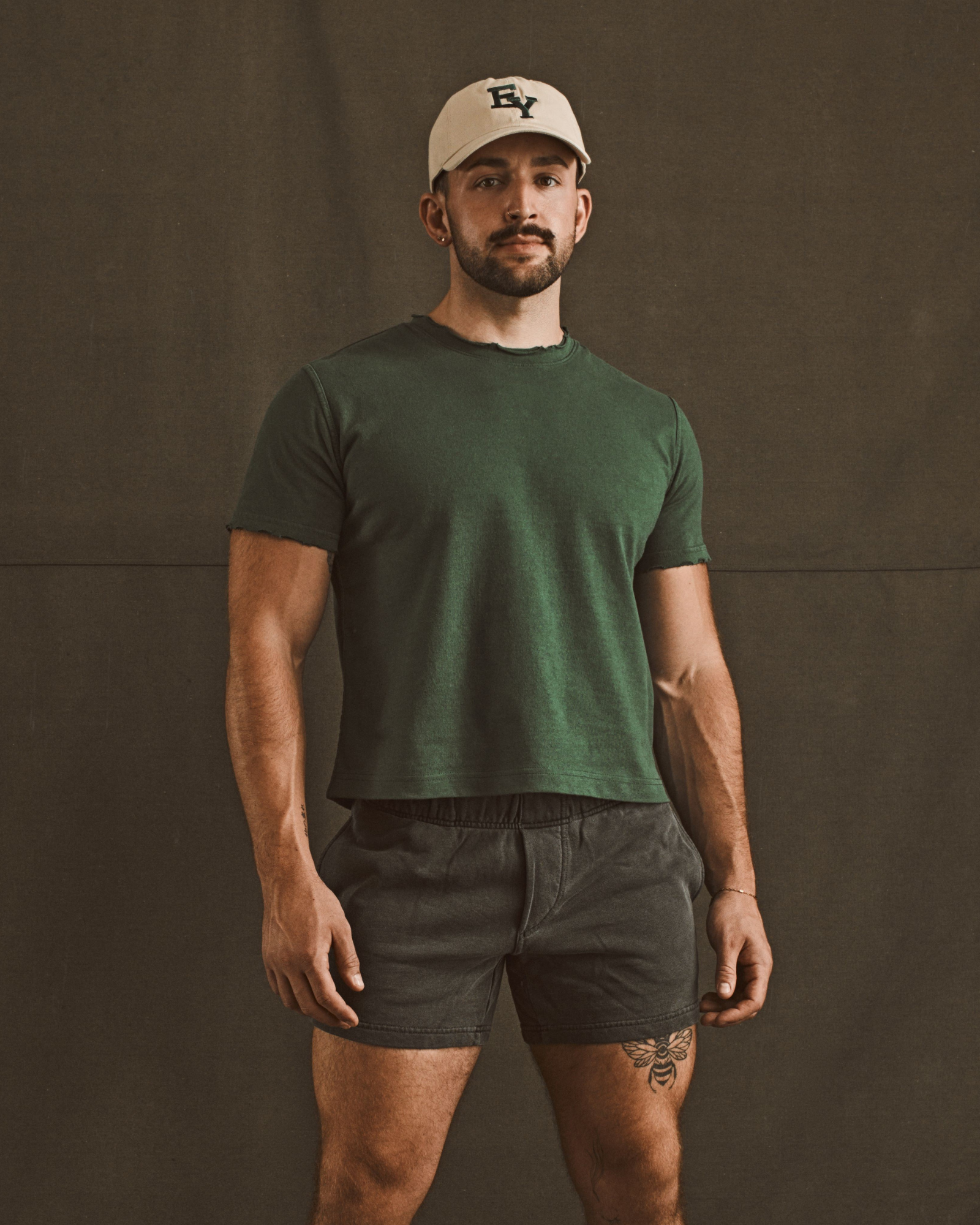
These are choices about feel, fit and everyday use. A good fabric still needs good care. Choose the layer for the day you have planned, and care for it according to its label.
For more on building a cotton-focused wardrobe, read our guide to cotton gym wear.
Find your everyday layer
A tank under an open shirt. A substantial tee with your usual shorts. Pieces that make sense before the workout and after it.
Frequently Asked Questions
Why do synthetic workout clothes smell more than cotton?
Polyester can take up oily compounds and odorants differently from cotton, and fabric type can influence which microbes grow on worn clothing. That can make polyester smell stronger under some conditions. Cotton can still develop odor, and nylon does not behave exactly like polyester.
Why do workout clothes still smell after washing?
Body soils may remain after an ineffective wash. An overloaded drum, an unsuitable cycle or too much detergent can contribute to poor cleaning or rinsing. Check the garment label and detergent directions, leave room in the washer and dry the garment fully before storing it.
What is the best detergent for smelly workout clothes?
There is no single formula that suits every garment and washer. Choose a detergent compatible with both, including an HE formula where required, and measure the dose for the load and soil level. Follow the garment care label before using any pretreatment or laundry additive.
